
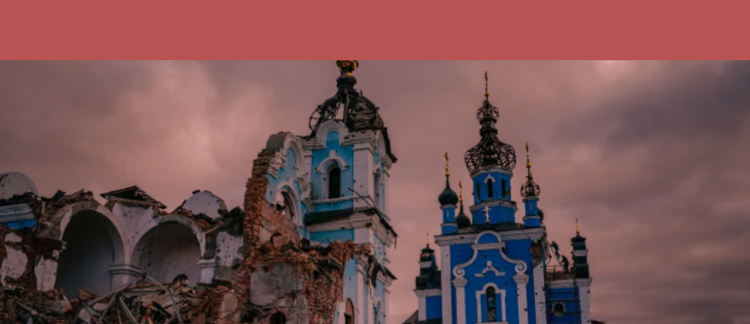
Kyiv, an Ukrainian psychoanalyst
Language matters.
Our Flamenco dance trainer today officially announced that she will switch to Ukrainian language only “to distance herself from these fucking Russian bastards”.
The Ukrainian Army, although stuffed by both Russian and Ukrainian speaking officers, issued an order to speak Ukrainian in all communications, including the private ones, to be distinguished from the enemy.
Society consolidation.
Yesterday Ukrainians transferred 80 million hryvnia during 5 hours to the account assigned for supporting Ukrainian Army.
If one wants to receive a gun, he can, but he needs to line up for hours (400 people ahead).
Heroism
Yesterday some Ukrainian sailors were attacked by a Russian military boat. Russians said: “We are a Russian ship. Give up to save your lives”. «Russian ship, fuck you”, responded Ukrainian sailors. All of them - 13 people - were killed. All were awarded with the title of Hero of Ukraine (posthumously).
There more every day in every field.
Regards,
Natalia Nalivayko
_______________
From Kyiv, evening 26 February
We woke up somewhere between 2.30 and 3 am to repeated powerful explosions. We understood that they were somewhere very close to us. The daughter and the son-in-law were already awake (they moved to our flat to stay together during these times). We read in the news that there was a fight in the street close to the place where the military unit was located. They fired, fired and fired. People ran to the bomb shelter, many spent a night there together with their pets. In the morning we found out that the highway bridge was blown up and several buildings destroyed.
It is an awful, awful feeling.
I am writing this short story about myself and I can't believe it is happening to me.
------------------------------
Also,
Please see below a comment of a russian psychoanalyst Roman Kreik (Роман Крейк) which he wrote under the post of a ukrainian doctor who posted pictures of a hospital with wounded children. I copied it in russian and translated it into English.
Do not tell me that it is Putin who is evil. No. He serves an unconscious desire of its vile and wild people. If not, they would raise their lazy heads and asses and do something with this disaster.
I appeal to the Ukrainians. It depends on you how your country will develop. It is in your power to clean your country from the fascist evil spirits that have flourished for many years. Only then is recovery possible.
The human psyche is so arranged that when it is in a pathological state for a long time, it begins to consider it normal and perceives attempts to correct it as an attack.
Your reaction and perception are understandable.
Believe me, from the outside the picture is perceived with everything differently and more fully than when you are in a situation and you see only what is under your nose. I understand that you are now very scared and emotionally difficult. I can't imagine how difficult it is. I wish you the strength to endure this emotional state.
Soon the surgery to remove the tumor will be over.
______
Some history
Lavra. Comes back to 1051. Has nothing to do with Russia. It was the time of Kyiv Rus. Russia is much later formation. Thus, Lavra has nothing to do with Russian architecture, it is so-called Ukrainian baroque. Hetman Mazepa, the biggest Russian enemy, even more hated than Bandera, contributed to its huge costs.
It is a product of propaganda to call architecture in Kyiv a Russian one.
The real conflict between two countries has been lasting for centuries due to Russia's constant intention to annex Ukrainian territory and history. "There is no Russia without Ukraine" some of the leaders said I do not remember who. 2014 just revealed it because Ukrainian society has reached the point where it was able to oppose itself to feudalism, where its subjectivity started to appear which Russia could not stand.
Foreigners may not grasp the real difference between Ukraine and Russia. But there is a fundamental one which is not so obvious on the surface: it is an attitude to freedom. There is a special word in Ukrainian language for freedom - воля - liberty. Thirst for liberty inspired all revolutions and is an engine of unprecedented heroism of the current Russian-Ukrainian war. That is what Russia also cannot stand.
Ukrainian do not use patronymics, Russians do, yes. But the elder population here also use them as a consequence of sovietisation-russification during the soviet times, but it is not organic, and we are coming back to our roots now. It's about the recognition of a woman. Being assigned a patronymic name means belonging to the father: as you said Olga Petrovna - the daughter of Petr. Here, in Ukraine, the baby's metrics along to his/her name included father and mother name. For example, in my grandmother's metrics, given to her parents in the church in 1914, was written: "Olga, the daughter of Kalenyk and Maryna".
In addition to this in Russia after the marriage the woman was obliged to take the husband's surname. While in Ukraine after the marriage the woman's surname could be "Natalia Nalyvaiko, born Ivanenko", for example. Thus, not necessarily she was losing her self.
Ukrainian poverty is not really poverty, but an unconscious manifestation of a collective trauma of Holodomor*. People in the village who were the physical victims of this catastrophe prefer to pretend to be poor not to be robbed again. But if you would be their guest by chance, you would be very much surprised how rich table you will be sitting at. I do not recommend you to go to the Russian village, like I mistakenly did some years ago. It is real poverty and alcoholism.
There are enough facts for now, I believe.
Moreover, because siren started I need to run quickly to the shelter to hide myself and my family from brotherly russian bombs. This is one ore fundamental difference - we would never do it.
Kind regards,
Natalia
* The Holodomor (Ukrainian: Голодомо́р, 'to kill by starvation'), also known as theTerror-Famineor the Great Famine, was a famine in Soviet Ukraine from 1932 to 1933 that killed millions of Ukrainians. It was a large part of the wider Soviet famine of 1932–1933.
_____
Kyiv, an Ukranian Psychoanalyst and EJP Editor
Dear Colleagues,
We have read Sergio Benvenuto's discussion "La psicoanalisi nella guerra. Un dibattito con colleghi russi". We, who are now in Kyiv, where shells are exploding and rockets are flying (we don’t even know what ones), where children are born in bomb shelters, where there is not enough food and medicine, we want to say the following. In this situation, all the symbolic ranks are collapsing. All these arguments about the war seem to us as far away as from the Moon. A certain historical monolith that connected two countries was destroyed. The invasion of Ukraine is the biggest mistake that could have happened and it had taken place already.
Best regards,
Svetlana Uvarova
01-03-2022
----
Dear Sergio,
I hope you are well and safe during this hard time. Just completed reading the email from EJP editorial board, I had different mixed feelings and only I can say that I am disappointed…after reading your debate with your Russian supervisees.
I know that for the last days my heart is broken by the war between my Russian and Ukrainian siblings, as the war between beliefs and ideas. Recently we, Kazakhstani citizens and guests have experienced terrifying Tragic January. We hadn’t been able to have enough time to take any breath and recover after Tragic January as we witnessed Russian invasion. I'm shocked! You know that I came from the Soviet Union, and I see all post-soviet people as my siblings even if we are now independent nation. Still, they are my siblings. Now, I feel this war as a war between my sisters and brothers. To be honest, all this terrible situation makes me cry, I feel so sad, so sorry, I felt guilty, even more I feel as if it was my responsibility. I cannot imagine dying women, men, and children. I was reflecting on this. It feels that I am from a peaceful family, growing with no hatred and violence. I even especially tried to think if I hate Putin. No. No hatred towards him but sadness, disappointment on Putin's regime and violence. My heart is breaking down day by day. I tried to stop psychosomatic processes inside of me. As an active person, I started to organize a group of psychological support for everyone in Ukraine and Russia, and those who suffers from and gets affected by the war. Our team, my students and I sent our banner offering a free help via many social networks. We had this type of support for ones affected by Tragic January in my country, even there was low Internet connection, we run free online groups of psychological support beginning January 6th until the end of the month. And now back to your debate… I believed that we, analysts are apolitical in the sense that we do not participate in any political parties, harming events. But it doesn’t mean we avoid our feelings connected with suffering people, with killing and bombing. I guess, some might think different. I didn’t expect that Russian supervisees could hold aggression and violence towards Ukrainians or as you say towards one who has deviating point of view. Some years ago some of them used to be my classmates in studying psychoanalysis…. I didn’t expect that they might be in the traps of idealization of their president. I can understand every citizen may and must respect their leader. But! Be supporter of the murder... So aggressive analysts might influence / increase aggressivity of their patients…No words… Just broken heart… I totally agree with your words: those who want to practice analysis must practice this ethics. And this ethics consists in not acting out our impulses of violence and oppression, which exist in each of us. We have to recognize them unconsciously, not commit them in reality. May I introduce myself? Since 2005 I led the Kazakhstan Psychoanalytic Association, now I am the director of Psychoanalytic Institute for Central Asia. Our students are from Kazakhstan, Kyrgyzstan, Tajikistan, and Uzbekistan. Very few supervisees of mine are from Ukraine and Russia. Our regular teachers are from Europe, India, and USA. We are taught by your Italian colleagues Graziano De Giorgio, Luca Caldironi, Paola Vizziello. By the way, I know you from your paper in Russian on history of Italian psychoanalysis. It was almost 20-25 years ago. Today I tried to find that paper on Google with no result. I remember well you called there one Italian analyst who was active on TV and radio shows as “psychoanalytic granddaddy” of Italy. At that time, I was doing my first steps in the field of psychoanalysis. Then I thought that I should become a good enough “psychoanalytic grandma” in my country. Really, I devoted many years to “propaganda” of psychoanalytic culture through different TV and radio shows in Kazakh and Russian. I recalled this story because very recently a friend of mine, psychoanalyst from India called me “Central Asian psychoanalytic grandma”.
All the best,
Anna Kudiyarova, PhD, Fulbright Scholar to USA, Director of the Psychoanalytic Institute for Central Asia, Almaty, Kazakhstan.
14-03-2022
----
Dear Sergio!
I have read your article “Psychoanalysis in the war. A debate with Russian colleagues”. Thank you, although it’s very sad to read about such positions of Russian colleagues. And I feel fear. Because:
Moral norms are something very deep which is in the basis of a person. If the norms are humanistic and democratic they are the same as psychoanalytical norms. But if the norms are superficial they are easily destroyed in a non-standard situation. And you can see that an analyst has collected a lot of knowledge, has mimicried under the psychoanalytical values but he (or she) has stayed an authoritarian person.
I live in Belarus. I am a candidate of EPI. I think all my colleagues are against the war in Ukraine. But in 2020, when the protests against cruel dictature in my country began, I was deeply disappointed by the position: an analyst should be neutral and should stay in a psychoanalytical chair and not on the street with other protesting people because all revolutions are manifestations of the splitting. I think that fear is covered under such a position. Fear is covered under the proclaimed moral norms and psychoanalytic postulates. Nowadays, in the time of cruel repressions in our country and serious danger for people because of the war, many patients ask for decreasing the payment and changing of the setting. So called analysts consider it as an attack on the setting and psychoanalytical borders. But what about reality and humanity? Probably under the pursuit to preserve the setting the pursuit to preserve the analyst’s comfort is covered?
I think about the reasons. And I think about the situation in Psychoanalysis, in IPA. And I have many questions
1. Why are there so many narcissically organized analysts who don’t realize their motives and reactions? Why are they so easily attested? They propose their views as the cultural norms to their patients, to their students! And they do harm to their patients!
2. Why so widely spread a limited psychoanalytical education? (for example 2-3-years courses of theory and personal analysis). Pragmatism and financial profit lead to degradation of psychoanalysis!
3. Why do psychoanalytic societies or funds propose theoretical education before the end of personal analysis? It’s a situation when an analysand - a feature psychoanalyst adopts/adjusts his feelings to “psychoanalytically correct and expected” and he/she escapes his real feelings, his real Self. He/she strengthens the defenses, he/she knows the theory very well but he/she cannot hear the experiences of the patients.
And I think about the psychoanalysis in the post-soviet countries. The wide-spread feature of a post-soviet psych is a special attitude to violence. In my opinion, fascism is not a special phenomenon in politics, in the society as a whole or in behavior of one nation towards another nation. It’s a manifestation of the abusing and anti humanistic attitude to people. It’s a manifestation of arrogance and permissiveness, absence of respect and empathy. It is formed in the families and cultures where the violence prevails and often not recognized. It’s very important to see and treat this problem.
In my opinion, many post-soviet analysts assimilate external psychoanalytical forms; even their minds successfully fit in the given formats of the psychoanalytical theories. But it does not mean that they think psychoanalytically. As one of Italian psychoanalysts (unfortunately I don’t remember his name) said: “Empathism appears instead of the empathy”. There is a huge danger here.
I think Russian colleagues and Belarusian as well should not be isolated from the world. But we must speak about the problems, call them, and not play to “wise neutral analysts standing above the good and evil”.
Best regards,
Irina Cheliadinskaya, Minsk
18-03-2022
-----